
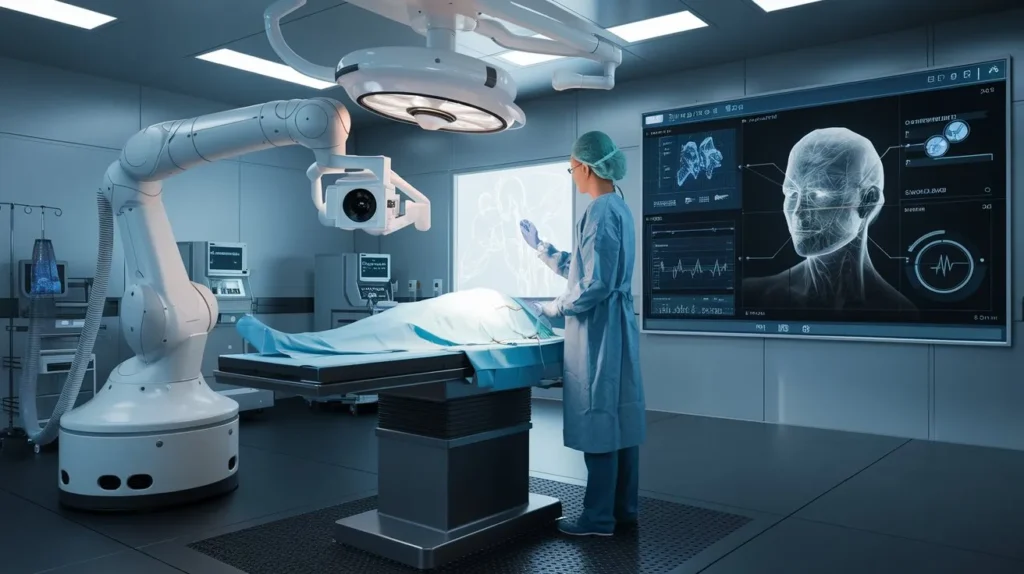
Artificial Intelligence (AI) is revolutionizing industries worldwide, and healthcare is no exception. From medical diagnostics to personalized treatment plans, AI in healthcare is transforming the way patients receive care and how doctors make decisions. As the healthcare industry continues to embrace AI, its potential to improve efficiency, accuracy, and outcomes is becoming increasingly clear.
In this article, we’ll explore how AI is reshaping healthcare, the benefits it offers, the challenges it faces, and what the future holds.
What is AI in Healthcare?
AI in healthcare refers to the use of machine learning algorithms, natural language processing, and other advanced technologies to mimic human intelligence in analyzing complex medical data. These systems can assist healthcare professionals in various ways, from diagnosing diseases to recommending treatment plans.
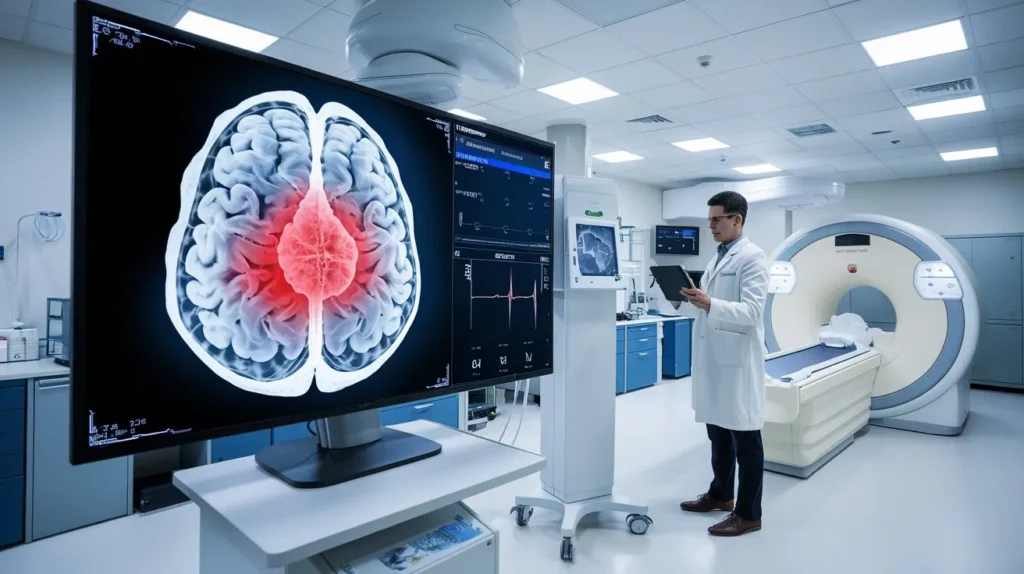
AI in medical diagnostics, for instance, uses vast amounts of data to detect patterns that may not be visible to the human eye. This can lead to earlier detection of diseases like cancer or heart conditions, significantly improving patient outcomes. Other forms of AI, such as deep learning models, are also used in medical imaging, analyzing CT scans or MRIs to identify anomalies more accurately than traditional methods.
Applications of AI in Healthcare
AI is already making an impact across multiple facets of the healthcare industry. Let’s look at some of the key applications:
1. AI in Diagnostics
One of the most promising applications of artificial intelligence in healthcare is medical diagnostics. Machine learning algorithms can analyze X-rays, CT scans, MRIs, and other medical images to identify patterns that may require further investigation. These tools can help doctors detect conditions earlier and prioritize patients who need urgent attention.
For example, certain AI-enabled medical devices can assist in identifying diabetic retinopathy and other medical conditions. The US Food and Drug Administration maintains a list of AI-enabled medical devices that have received authorization for marketing in the United States. These tools support medical professionals but do not eliminate the need for clinical judgment.
2. AI in Personalized Medicine
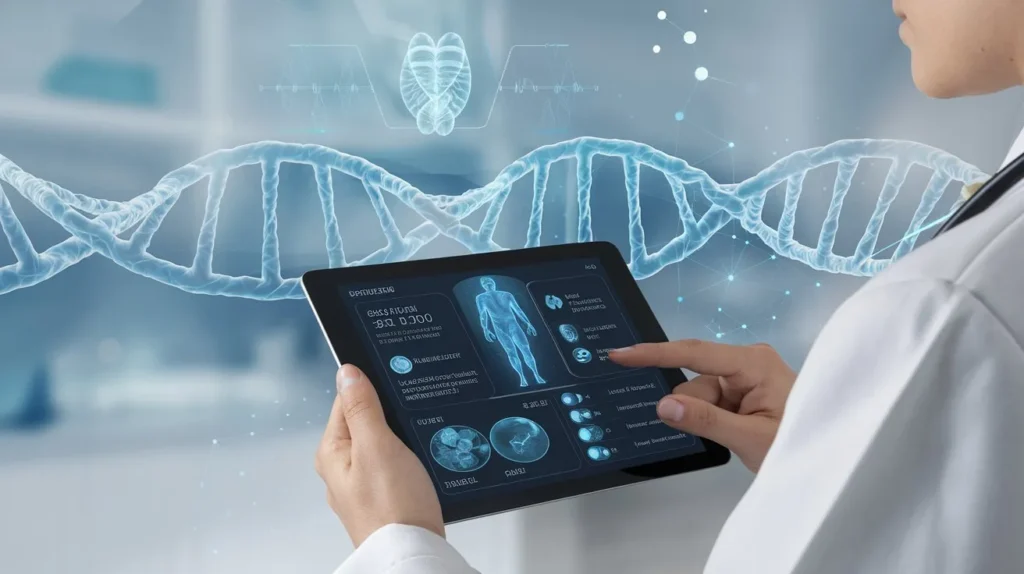
One of the most promising applications of AI in healthcare is personalized medicine. By analyzing individual patient data, including genetic makeup and lifestyle factors, AI can recommend customized treatment plans tailored to each person. For instance, AI in personalized medicine has proven effective in pharmacogenomics, which customizes drug treatments based on how an individual’s body will likely respond to specific medications.

3. AI in Drug Discovery
AI accelerates the traditionally time-consuming and costly drug discovery process. AI algorithms can sift through vast datasets to identify potential drug compounds and predict how they will interact with biological systems. A notable example is AI’s role in accelerating the development of vaccines during the COVID-19 pandemic, drastically reducing the time from discovery to clinical trials.

4. AI in Surgery
AI-assisted surgery, particularly with robotic tools, is making minimally invasive procedures more precise and less risky. AI systems guide surgeons by providing real-time data and predictive models, improving the accuracy of surgical interventions. This leads to better patient outcomes, faster recovery times, and fewer complications.
5. AI in Administrative Workflows
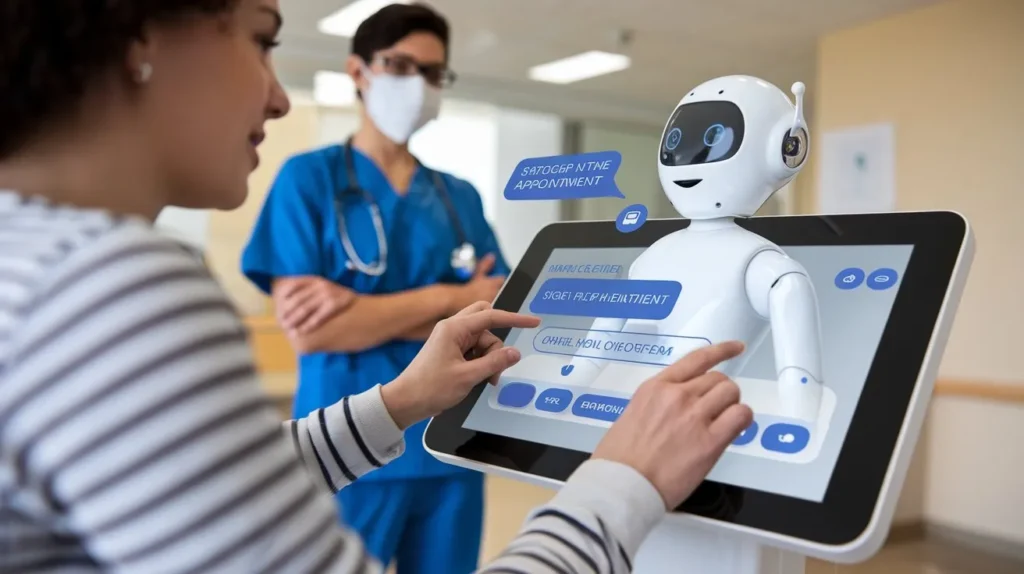
Administrative tasks in healthcare, like scheduling appointments, billing, and managing patient records, can be time-consuming. AI streamlines these tasks by automating routine processes, allowing healthcare professionals to focus more on patient care. AI-powered chatbots are also being used to answer patient queries and assist with basic tasks, such as appointment reminders.
Benefits of AI in Healthcare
The integration of AI into healthcare comes with numerous benefits, including:
- Improved Accuracy: AI reduces the risk of human error in diagnosis and treatment, offering more precise results. For instance, AI in healthcare diagnostics has led to earlier detection of life-threatening diseases like cancer, where time is critical to treatment success.
- Efficiency and Speed: AI can process large amounts of data faster than humans, making diagnosis and treatment planning much quicker. This is particularly important in emergency situations where rapid decision-making can save lives.
- Cost-Effectiveness: By streamlining workflows and improving the accuracy of diagnoses and treatments, AI can reduce the overall cost of healthcare. Fewer errors and more efficient processes lead to reduced waste and lower expenses for both providers and patients.
- Better Patient Outcomes: AI enables personalized treatment plans, ensuring patients receive the care that’s best suited to their unique conditions. This leads to better patient outcomes and a higher quality of life.
- Reduced Physician Burnout: By automating routine administrative tasks, AI allows doctors to spend more time with patients and less time on paperwork. This helps reduce physician burnout, a growing concern in the healthcare industry.
Challenges and Ethical Concerns
While the potential of AI in healthcare is vast, there are also significant challenges and ethical concerns that need to be addressed.
- Data Privacy: AI systems rely on access to large amounts of sensitive patient data. Ensuring the privacy and security of this data is critical. Any breach in data security could erode patient trust in AI-driven healthcare solutions.
- Bias in AI Algorithms: AI systems are only as good as the data they are trained on. If the training data is biased or incomplete, the AI could make flawed or biased decisions, leading to unequal treatment for certain populations.
- Over-Reliance on AI: While AI can assist in decision-making, there’s a risk of over-reliance. Physicians should use AI as a tool, not a replacement for their expertise and judgment.
- Regulation and Accountability: There’s currently a lack of clear guidelines on the regulation and accountability of AI systems in healthcare. Who is responsible if an AI makes a wrong diagnosis? Ensuring proper oversight and accountability is crucial as AI becomes more integrated into the healthcare system.

The Future of AI in Healthcare
Looking ahead, the future of AI in healthcare is promising. Predictive analytics will allow healthcare providers to identify potential health crises before they occur, from pandemics to individual patient risks. AI will also continue to advance personalized medicine, offering treatment options based on a person’s genetic profile.
Telemedicine, another growing field, will likely benefit from AI, with virtual healthcare services becoming more accessible and efficient. Additionally, AI is poised to play a significant role in global health by providing low-cost solutions to underserved populations through mobile health platforms and AI-driven diagnostics.
Conclusion
AI in Healthcare is creating new opportunities in diagnostics, personalized medicine, drug discovery, surgery, and hospital administration. Its greatest value lies in helping healthcare professionals make informed decisions and deliver more efficient, patient-centered care.
By addressing safety, bias, privacy, and accountability, healthcare organizations can explore AI’s potential while keeping patients’ well-being at the center of medical practice.
Disclaimer: This article is for informational purposes only and does not constitute medical advice. AI tools should not replace professional medical judgment. Always consult a qualified healthcare professional for diagnosis or treatment.